Silver
Early Silver Extraction in Antiquity
Archaeological evidence shows organized silver extraction began around 3000 BCE in Anatolia (modern Turkey). Early metallurgists developed cupellation, heating galena (lead sulfide ore) to 1000°C to separate silver from lead. By 2000 BCE, Minoan craftsmen at Knossos optimized this process, building furnaces reaching 1100°C to extract silver from lead-silver ores imported from the Laurion mines.
This technology let silver move from rare natural alloy to mass-produced commodity. Silver became central to statecraft. By 2900 BCE, pre-dynastic Egyptian rulers built acquisition networks through Asian trade routes. The metal held religious significance; Egyptians associated silver with lunar symbolism and the goddess Isis, using it for religious artifacts. By 1850 BCE, Middle Kingdom texts recorded silver deben rings at 91 grams each as standardized units of account.
Mesopotamian city-states adopted silver for economic exchange by 2800 BCE, using rings and coils as proto-currency. Old Assyrian commercial texts from Kültepe (1950 BCE) recorded silver-tin exchange rates at 1:7, facilitating Bronze Age trade. The Mari palace archives (1900 BCE) documented sophisticated financial instruments including 10-shekel silver loans at 33% interest for agricultural ventures.
The Laurium Mines and Athenian Power
By 1200 BCE, silver production shifted to the Mediterranean. The Laurium mining districts on Greece's Attica peninsula became the center of extraction. While Bronze Age miners had worked Laurium since 3200 BCE, systematic exploitation accelerated in the 6th century BCE.
The Laurium mines were an unprecedented industrial enterprise. They featured underground shafts, galleries, and specialized washing areas for ore concentration. Athens controlled these as public property, licensing extraction rights to private citizens for a percentage of output, powered primarily by enslaved labor.
The wealth from Laurium's galena deposits financed the Athenian Empire. Silver revenues built the naval fleet that defeated Persia at Salamis in 480 BCE. This victory secured Athenian hegemony and funded the "golden age" of Athenian democracy (454-404 BCE). Xenophon described these operations in his 355 BCE essay "Ways and Means." After shallow deposits exhausted around 380 BCE, the mines lay dormant until French and Greek engineers briefly reopened them in the 1860s.
Roman and Colonial Silver
By 100 CE, Rome centralized extraction in Hispania (Spain) and Britain, using advanced smelting to supply bullion for military expansion and Asian trade.
The most profound shift followed European colonization of the Americas in 1492. The "mountain of silver" at Potosí, Bolivia, plus massive Peruvian and Mexican reserves, reconfigured the global economy. Between 1500 and 1800, Latin America produced over 85% of world silver, financing Spanish dominance and establishing permanent trans-oceanic capital flows linking Europe, the Americas, and Asia.
Modern Extraction (1876–1920)
19th and 20th century modernization multiplied global output. Steam-assisted drilling, mine dewatering, and improved haulage transformed the industry. The cyanide process (1876-1920) used cyanide solutions to leach silver from ore with unprecedented efficiency, quadrupling global production to nearly 120 million ounces annually.
Massive North American discoveries like Nevada's Comstock Lode, plus new deposits in Australia and Africa, pushed annual production to 190 million ounces by 1920. Electrolysis further improved refined silver purity, setting the stage for silver's transition from monetary asset to industrial component.
Silver as Currency
Ancient Origins
Formal silver coinage began around 600 BCE in Lydia. Greek coinage was artisanal: a design was carved into a bronze or iron block, the reverse into a metal punch. A blank disk of gold, silver, or electrum (natural gold-silver alloy) was cast, placed between block and punch, and struck with a hammer.
By the 5th century BCE, the Athenian drachma (containing one-eighth ounce of silver) became an international standard, facilitating Mediterranean trade. This legacy continued through the Roman denarius, British pound sterling, and Spanish dollar. Backed by Potosí's output, the Spanish dollar became the world's first truly global currency.
The Bimetallic Era
Silver's peak as formal state finance came during the 19th-century bimetallic era. Under bimetallism, currency was backed by both gold and silver at fixed exchange ratios. Early 1800s France stabilized this global system; Napoleon linked the French franc to both metals, absorbing bullion fluctuations and anchoring neighboring economies.
Before the 1870s, advanced economies were tied by this bimetallic network. The 1857 Vienna Currency Treaty mandated that Zollverein members and Austria base currencies on silver, establishing 4:6:7 exchange ratios between the Prussian Thaler, Southern German Guilder, and Austrian Guilder.
The Collapse of Bimetallism (1870–1873)
Global bimetallism fell not to market forces alone, but to geopolitical maneuvering and bullion supply shifts culminating after the 1870-1871 Franco-Prussian War. The newly unified German Empire sought to modernize its economy and integrate with gold-standard Britain. Influenced by the Handelstag (regional chambers of commerce), Germany introduced gold currency in 1873.
This was monetary policy as weapon. By dumping its massive silver reserves on open markets, Germany threatened to isolate other economies on a depreciating silver standard. Economic historian Flandreau modeled this as a macroeconomic "prisoners' dilemma." France had used its bimetallic status through the 1860s to deter German currency reform. Now France faced massive "quasi-fiscal cost": maintaining bimetallism meant absorbing Germany's liquidated silver, inflating its silver share at the expense of gold reserves.
Flandreau's models showed bimetallism could theoretically have absorbed the 1870s "silver glut," but the political risk was untenable. In October 1873, France suspended free silver coinage, initiating global bimetallism's collapse to limit demonetization costs. Italy, Belgium, and Switzerland of the Latin Monetary Union followed immediately.
The Crime of 1873 and Deflation
European demonetization hit the United States through the Coinage Act of February 12, 1873 (17 Stat. 424). Contemporary inflationists and western mining interests called it the "Crime of 1873." The legislation covertly defined the gold one-dollar coin as "the unit of value" while omitting the pre-1873 standard silver dollar (412.5 grains). Instead it authorized a heavier 420-grain "trade-dollar" and smaller subsidiary silver coins with restricted legal tender status, shifting the U.S. toward de facto gold standard.
Legislative histories show this was deliberate. Deputy Comptroller John Jay Knox and Mint Director H.R. Linderman anticipated silver's price decline relative to gold.
The macroeconomic consequences were severe. As the U.S. and Europe shed silver simultaneously, the global gold-to-silver ratio, stable around 15.5:1 for decades, collapsed. London bar silver dropped from $1.298 per fine ounce in 1873 to $0.635 by 1894, a 51% depreciation pushing the implied ratio above 30:1.
This silver depreciation caused severe deflation in economies still tied to the metal, financially straining agrarian populations and sparking political divisions between the silver-producing American West and gold-backed eastern financial establishments.
Legislative responses like the Bland-Allison Act of 1878 ordered Treasury purchases of $2-4 million in silver monthly to appease western miners. The Sherman Silver Purchase Act similarly attempted price subsidies. These measures undermined national gold reserves and were repealed, culminating in the Gold Standard Act of 1900.
Complete silver demonetization opened the door to modern fiat currency. History shows fiat money relies on public faith. The 13th-century Mongol Empire under Kublai Khan pioneered fiat concepts with "chao" notes loosely linked to silver. Fourteenth-century European promissory notes established trust-based exchange. But when confidence fractures, absence of metallic anchors produces severe monetary degradation, seen in Weimar Germany and 2000s Zimbabwe hyperinflation.
The Industrial Transformation
The 21st century inverted silver's valuation paradigm. Historically categorized with gold as a monetary asset, silver has become an irreplaceable, actively consumed industrial commodity. Industrial applications now consume the majority of annual global supply, rising from roughly 45% of demand in 2015 to nearly 59% by 2024-2025. In 2024, industrial consumption hit a record 680 million ounces from total global demand of 1.16 billion ounces.
This structural shift permanently alters silver's price elasticity, tying the metal to technological megatrends (green energy transition, advanced computing) rather than traditional jewelry or investment cycles.
Silver has the highest electrical and thermal conductivity of any element at room temperature, plus extraordinary malleability and corrosion resistance. These properties are now mandatory for electronic miniaturization and high-voltage energy management. In 2024, the electronics and electrical sector drove demand to a record 465.6 million ounces, about one-third of total consumption.
Every smartphone, laptop, and television uses silver in printed circuit boards, semiconductor packaging, and electrical contacts. Global production of 1.3 billion smartphones alone consumes over 10.4 million ounces annually.
Solar Photovoltaics
The global renewable energy transition has positioned solar photovoltaics (PV) as the fastest-growing industrial silver demand vector. In 2014, solar consumed 11% of industrial silver; by 2024 this exploded to 29%, approximately 197.6 million ounces annually.
Silver applies directly in PV cell manufacturing. Front-surface electrode grids require 10-12 grams for primary current collection. Advanced bifacial back-contact systems use an additional 2-3 grams. Interconnection ribbons linking cells require 1-2 grams more.
The solar sector faces a "thrifting" paradox. Engineering has reduced silver mass per individual PV cell, but this reduction has been overwhelmed by exponential growth in global solar installations. In 2024, roughly 400 gigawatts of capacity were added globally, bringing total installed capacity to 2.2 terawatts. The International Energy Agency's Net Zero targets require over 800 gigawatts of annual installations to reach 7+ terawatts by 2030, suggesting solar silver consumption will exceed 200 million ounces annually soon.
Supply chains introduce geopolitical risks. Over 80% of global PV manufacturing occurs in China. In 2024, Chinese domestic solar installations accounted for 218 gigawatts (53% of global additions), consuming 40-45 million ounces purely for its domestic market. This concentration risks supply bottlenecks for Western nations meeting clean energy mandates like the European Union's 700 gigawatt solar target by 2030.
Grid modernization compounds demand. Order backlogs for high-voltage transformers (equipment using silvered contacts and buswork) tripled at Hitachi Energy to $43 billion, indicating immense downstream silver demand.
Electric Vehicles
Global automotive fleet electrification creates massive, compounding silver demand. Traditional internal combustion engine (ICE) vehicles use 15-28 grams of silver per unit, mainly in minor electrical contacts and relays.
In contrast, battery-electric vehicles (BEVs) require 25-50 grams per unit, a 67-79% increase. Fully autonomous, premium electric, or fuel-cell vehicles (FCEVs) contain 50-100 grams each.
This increase stems from complex power electronics managing high-voltage direct current. Silver integrates into battery management systems (BMS), high-voltage contactors, DC-DC converters, charging infrastructure, and Advanced Driver Assistance Systems (ADAS) like radar and lidar sensors.
To dissipate EV drivetrain heat, sintered silver pastes are replacing traditional solders in semiconductor die-attach applications. With global EV sales surpassing 14 million units in 2024, automotive silver demand rose from 61 million ounces (2021) to 80 million ounces (2024), with projections of 90 million ounces by 2025.
Solid-state batteries may escalate consumption further. Samsung and other manufacturers are developing solid-state batteries using silver-carbon composite anodes. This architecture doubles lithium-ion energy density, enabling 600-mile range and nine-minute charging. Each solid-state cell requires approximately 5 grams of silver. Scaled to an EV battery pack of roughly 200 cells, a single vehicle could need up to 1 kilogram. Widespread solid-state commercialization would severely disrupt global silver availability.
| Vehicle Classification | Average Silver Content per Unit |
|---|---|
| Traditional ICE Vehicle | 15-28 grams |
| Hybrid Vehicle | 18-34 grams |
| Battery Electric Vehicle (BEV) | 25-50+ grams |
| Fuel Cell Vehicle (FCEV) | 50-100 grams |
| Solid-State EV Battery (Projection) | ~1,000 grams (1 kg) |
AI and 5G Infrastructure
The most recent explosive vector for industrial silver consumption is AI data centers and the 5G networks supporting them. Global data center power demand is forecast to grow 165% by 2030, with U.S. hyperscalers planning $736 billion in capital expenditures through 2026.
AI processing generates unprecedented thermal and electrical loads. Standard data center server racks draw 10-15 kilowatts; AI-dedicated racks require 60-130+ kilowatts. A single generative AI query consumes nearly ten times the electricity of a standard search query.
Under sustained extreme electrical loads, any resistance generates destructive heat that causes AI chips to thermally throttle. Silver's unparalleled conductivity and resistance to oxidation make it the only viable material for high-speed interconnects, power distribution busways, high-cycle switching, and conductive inks in server printed circuit boards.
Current AI infrastructure consumes 5-8 million ounces annually, but exponential computing scaling suggests 20-35 million ounces by 2030.
Simultaneously, 5G network deployment relies heavily on silver. 5G operates at 2.6-28 GHz frequencies where silver's conductivity advantage over copper becomes physically necessary to maintain signal integrity. Each of the estimated 5-6 million global 5G base stations requires an average 11.5 grams of silver for antenna arrays and radiofrequency switching, demanding up to 19 million ounces annually during peak buildout.
IoT expansion adds further demand. As IoT installations grow from 15.1 billion active units (2024) to an estimated 27.5 billion (2030), each containing 50-200 mg of silver, IoT-specific demand may reach 35-50 million ounces.
Medical and Photographic Applications
Silver has biological properties leveraged for millennia. Hippocrates documented antimicrobial and anti-inflammatory effects by 400 BCE. Ancient Rome, Greece, and Egypt used silver vessels and filings to purify drinking water and treat wounds, unknowingly relying on slow-released silver ions to interrupt microbial metabolism.
Modern medical history began with silver nitrate in the 1500s to cauterize wounds and treat infections, becoming a standard 1800s antiseptic for ulcerations and neonatal conjunctivitis. Before Alexander Fleming discovered penicillin in 1928, silver was medicine's primary antimicrobial agent. World War I soldiers carried silver leaf to prevent infection. Antibiotics temporarily sidelined silver, but Professor Carl Moyer's 1964 use of 0.5% silver nitrate for severe burns, followed by silver sulfadiazine development, sparked a renaissance.
Today, facing antibiotic-resistant bacteria, silver appears in advanced wound dressings with silver nanoparticles, endotracheal tubes, and specialized coatings for urinary catheters and orthopedic implants. Silver attacks microbes through multiple pathways simultaneously: destroying cell walls, interrupting DNA replication, and breaking down protective bacterial biofilms.
Recent Boston microbiological research shows silver directly enhances existing antibiotic efficacy, sensitizing gram-negative bacteria to drugs like vancomycin.
Internal ingestion and injection (colloidal silver) are discouraged by experts due to toxicity risks including leukocytoclastic vasculitis and argyria (permanent blue-gray skin discoloration). But topical and device-integrated applications represent a massive, inelastic healthcare market.
Photographic demand has stabilized with a 3% recent uptick. Consumer digital photography eliminated most film processing, but medical X-ray film maintains baseline demand due to diagnostic accuracy, cost-effectiveness in developing nations, and legal status as unalterable physical evidence. Unexpected analog photography resurgence (instant film cameras, European premium photobook printing, commercial motion picture production) has insulated the sector from total obsolescence.
Market Dynamics: Deficits and Supply Constraints
Static mining output combined with exploding industrial demand has plunged global silver into severe structural deficit. Following modest pre-pandemic surpluses, the dynamic fractured in 2021 when demand (1,112 million ounces) exceeded supply (1,023 million). This imbalance accelerated to the largest recorded deficit in 2022: 272 million ounces. The deficit has persisted; 2024 marked the fourth consecutive year of shortfalls, with gaps between industrial consumption and available supply ranging from 149-215 million ounces depending on inventory metrics.
| Year | Total Global Supply (Moz) | Total Global Demand (Moz) | Market Balance |
|---|---|---|---|
| 2020 | 974 | 929 | +45 Surplus |
| 2021 | 1,023 | 1,112 | -89 Deficit |
| 2022 | 1,034 | 1,306 | -272 Deficit |
| 2023 | 998 | 1,208 | -210 Deficit |
| 2024 | ~1,000 | 1,160+ | -149 to -215 Deficit |
This imbalance has drained above-ground inventories to critical levels. COMEX registered silver stocks declined over 70% from 2020 peaks, creating the tightest physical market in decades.
Silver supply is inherently inelastic. Unlike primary base metals, most silver is mined as a byproduct of lead, zinc, and copper extraction, so production cannot rapidly scale with silver prices alone. Exploration budgets remain constrained. Average lead time from discovery to production for primary silver mines now exceeds 12 years.
Recycling offers limited relief. Global silver recycling rose 6% in 2024 to a 12-year high of 193.9 million ounces, but recovering silver from complex electronics requires high energy inputs and chemical separation, generally proving viable only when spot prices exceed $25-30 per ounce.
The investment narrative is shifting. Traditionally viewed through safe-haven flows, inflation hedging, and jewelry (roughly 25% of demand, led by India and Thailand), institutional and retail investors increasingly price silver on its necessity in future technologies.
In 2024, total silver demand reached 1.16 billion ounces. A slight 3% decline driven by physical investment weakness masked record industrial sector strength.
Investment vehicles include:
- Physical bullion (bars meeting 99.9% purity standards)
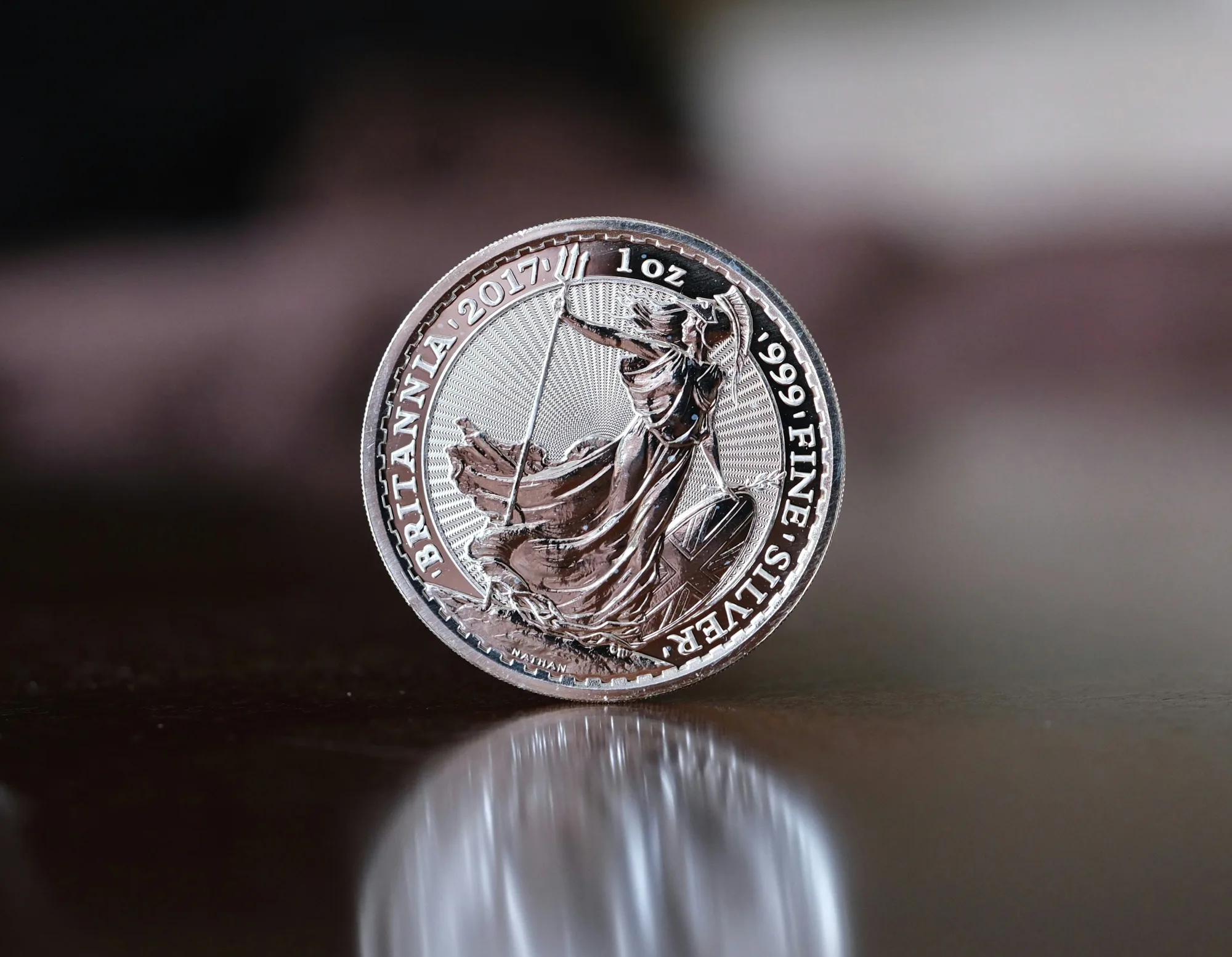
- Government-issued coins (99.9% pure, IRA-eligible with approved custodians)
- Medallions/Rounds (coin-like but lacking legal tender status)
- Exchange Traded Funds (ETFs) offering baskets of equities linked to physical metal, producers, and refiners
Export restrictions from manufacturing hubs like China, central bank accumulation trends (Poland and China's strategic gold purchases), and relentless industrial draw have pushed futures prices into the mid-$80s per troy ounce by early 2026.
Market Manipulation and Regulatory Enforcement
Silver's dual nature as historical monetary anchor and current industrial commodity/financial derivative has made its pricing vulnerable to institutional manipulation. This history is documented through decades of federal litigation, criminal prosecutions, deferred prosecution agreements, and multi-hundred-million-dollar settlements by the DOJ, CFTC, and SEC.
The Hunt Brothers and 1980
The first major modern disruption came via physical market cornering by oil billionaires Nelson Bunker Hunt and William Herbert Hunt in the late 1970s. Motivated by distrust of fiat currency and rapid inflation, the brothers borrowed massively to acquire physical silver and futures contracts, demanding actual delivery rather than cash settlement.
By hoarding over 100 million ounces (valued in the billions today), they constrained global supply and drove prices from roughly $6 per ounce (1979) to nearly $50 by January 1980.
The manipulation threatened to collapse brokerage firms and banks exposed to the leveraged trades. The COMEX Board of Governors held over 25 emergency meetings. On January 7, 1980, they imposed strict position limits. On January 21, they restricted trading to "liquidation-only," banning new purchases and preventing the Hunts from rolling positions. The Federal Reserve simultaneously restricted bank loans for speculative commodities trading.
Deprived of leverage and facing insurmountable margin calls, the Hunts' position collapsed on Thursday, March 27, 1980 ("Silver Thursday"), sending prices plunging over 50% to under $11 in a single session.
Regulatory aftermath established enforcement precedents. The CFTC fined the brothers $10 million each and banned them for life from American commodity markets. Peruvian state minerals company Minpeco sued for damages from the crash. A federal jury found the Hunts guilty of conspiracy, manipulation, monopolization, and racketeering, awarding over $130 million.
The London Silver Fix
While the Hunts used physical hoarding, subsequent manipulation involved institutionalized opacity. From 1897 until August 2014, the global silver benchmark price was set by the "London Silver Fix." This was determined not by open-market bidding, but through private conference calls at noon daily by fixing members (primarily Deutsche Bank, HSBC U.S.A., and Bank of Nova Scotia/Scotiabank).
Class-action antitrust litigation alleged this mechanism allowed artificial price dictation. By coordinating orders before official price publication, institutions generated risk-free trading advantages "in bull markets, bear markets, and everything in between."
The facade collapsed under legal scrutiny. In 2016, Deutsche Bank settled silver fix manipulation allegations for $38 million. As part of settlement, Deutsche Bank released over 350,000 pages of evidence including electronic chats and 75 audio tapes detailing direct trader collusion to rig benchmark prices, sparking secondary litigation against remaining banks.
Algorithmic Spoofing
Modern electronic order books enabled "spoofing": rapid algorithmic deployment and immediate cancellation of massive trade orders. This floods order books with false supply/demand signals, tricking other participants and high-frequency algorithms into executing against orders the spoofer wanted filled at artificial prices.
The DOJ and CFTC have prosecuted precious metals spoofing aggressively using improved data analytics.
In September 2020, JPMorgan Chase agreed to a record $920.2 million settlement, the largest CFTC monetary relief ever, resolving wire fraud and market manipulation charges. Between 2008 and 2016, JPMorgan traders placed hundreds of thousands of spoof orders in gold, silver, platinum, and palladium futures. The penalty: $311.7 million restitution, $172 million disgorgement, $436.4 million civil penalty, plus a DOJ Deferred Prosecution Agreement. The firm ignored numerous internal surveillance alerts.
Scotiabank reached a $127.4 million resolution with DOJ and CFTC in 2020 for criminal charges related to systemic spoofing in gold and silver futures over eight years. The case highlighted catastrophic compliance failures. Scotiabank had been fined $800,000 in 2018 for similar offenses but provided false statements to investigators to mask true fraud scope. CFTC analytics uncovered this deception, producing a specific $17 million fine solely for lying to regulators, atop $42 million for manipulation, $11.8 million disgorgement, and $6.6 million restitution. Investigation revealed three separate Scotiabank compliance officers (2013-2016) possessed information on illegal trading but failed to prevent it or investigate flagged activity, triggering a DOJ-mandated three-year independent compliance monitor.
HSBC agreed to a $75 million CFTC penalty for manipulative spoofing and record-keeping failures. Investigators found senior management used encrypted off-channel messaging (WhatsApp) to discuss work matters, circumventing compliance surveillance. This compounds HSBC's broader regulatory history including a record $1.92 billion 2012 DOJ settlement for catastrophic anti-money laundering failures, admitting facilitation of billions in transactions for sanctioned states (Cuba, Iran, Libya) and cartels while ignoring money-laundering risks from Mexican unit dollar transfers.
| Institution | Settlement Year | Total Penalty | Key Legal Findings |
|---|---|---|---|
| JPMorgan Chase | 2020 | $920.2 million | Algorithmic spoofing (8 years); Wire fraud; Ignored internal surveillance |
| Scotiabank | 2020 | $127.4 million | Spoofing; False statements to investigators; Severe compliance negligence |
| HSBC | 2023 | $75 million | Spoofing; Encrypted messaging to evade oversight |
| HSBC | 2012 | $1.92 billion | AML failures; Facilitation for sanctioned entities and cartels |
| Deutsche Bank | 2016 | $38 million | London Silver Fix antitrust coordination |
| Hunt Brothers | 1988/1989 | ~$150 million+ | Physical market cornering; Conspiracy; Racketeering; Monopolization |
Conclusion
Silver's trajectory reveals an elemental asset undergoing irreversible metamorphosis. From Bronze Age Anatolian cupellation furnaces to 19th-century bimetallic collapse, silver served as the bedrock of imperial finance and monetary policy. But the contemporary landscape has permanently decoupled silver from its monetary past.
The metal is no longer defined by central bank reserves or bimetallic arbitrage, but by immovable physical requirements of global industrial expansion. Rapid automotive electrification, massive solar photovoltaic transition, and explosive AI processing and 5G infrastructure demands mandate silver utilization. Because its thermal and electrical conductivity cannot be engineered out of advanced electronics, the market faces structural multi-year deficit. Global above-ground reserves are being drawn down, systematically outpacing static mining production and recycling constraints.
The regulatory landscape has shifted simultaneously. The era of unchecked benchmark fixing and algorithmic spoofing faces unprecedented data-driven scrutiny by global enforcement agencies. The DOJ and CFTC have established clear precedent: hundreds of millions in fines, mandated compliance monitors, and prosecution of institutions and individual traders who manipulate order books.
As friction between soaring inelastic industrial demand, constrained physical supply, and rigorous derivative oversight reaches critical mass, silver's role has crystallized. It has completed the journey from passive ancient wealth store to the active, irreplaceable conduit through which future global technology and energy infrastructure must flow.
FAQ
- Is silver more volatile than gold?
Often yes, in percentage terms, partly because the market is smaller and industrial narratives can swing sentiment.
- Does silver track gold one to one?
No. The ratio between them changes over time. They can diverge for months or years.
- Is silver "cheap" because the ratio is high?
A high ratio means silver is cheap relative to gold at that moment, not that either metal is cheap in absolute terms. Context matters.
- Is this financial advice?
No. This content is general education only.