
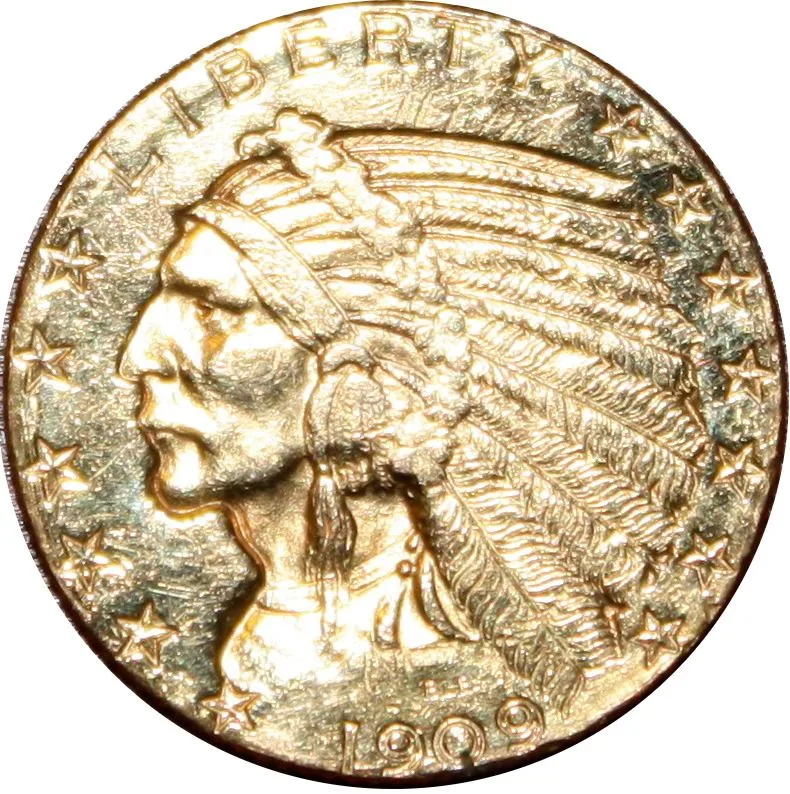
Constitutional gold
Origins of the Bimetallic Standard
The U.S. gold coinage system emerged from the downfall of the Articles of Confederation. During the 1780s, states and the Continental Congress printed paper money that rapidly became worthless. The Constitutional Convention addressed this chaos in 1787 by centralizing monetary power. Article I, Section 8, Clause 5 gave Congress exclusive authority "to coin Money, regulate the Value thereof, and of foreign Coin."
The Framers believed money needed intrinsic value, a position rooted in Enlightenment economic thought. Alexander Hamilton's 1791 "Report on the Establishment of a Mint" proposed a bimetallic system using both gold and silver. This prevented dependence on a single commodity and created a hedge against supply shocks.
Congress passed the Coinage Act of April 2, 1792, which established the United States Mint and defined the "eagle" as the base gold unit worth ten dollars. The law set a 15:1 silver-to-gold ratio and mandated a fineness of .9167 (22 karat), with an alloy of 11/12 pure gold and 1/12 copper and silver.
The First Gold Coins: Turban Head Series (1795–1834)
The Mint struck its first gold coins in Philadelphia during 1795: Half Eagles ($5) and Eagles ($10). Quarter Eagles ($2.50) followed in 1796. All featured Robert Scot's "Capped Bust Right" obverse, which collectors call "Turban Head" because Liberty's hair is wrapped in a Phrygian cap.
1792 Gold Standard Specifications:
| Denomination | Face Value | Total Weight (gr) | Fine Gold (gr) | Fineness | Diameter |
|---|---|---|---|---|---|
| Eagle | $10.00 | 270.0 | 247.5 | .9167 | 33.0 mm |
| Half Eagle | $5.00 | 135.0 | 123.75 | .9167 | 25.0 mm |
| Quarter Eagle | $2.50 | 67.5 | 61.875 | .9167 | 20.0 mm |
Early reverses showed a small eagle on a laurel branch. In 1797, the design changed to a heraldic eagle patterned after the Great Seal, and "E PLURIBUS UNUM" appeared for the first time on U.S. gold.
The 1804 Crisis and Export Problem
The 15:1 ratio worked poorly in practice. By 1800, European markets valued gold higher, at roughly 15.5:1. Bullion dealers could ship American Eagles abroad, melt them, and exchange the gold for silver worth more than ten dollars domestically.
This arbitrage drained U.S. gold reserves. President Thomas Jefferson suspended Eagle production in 1804 to stop the hemorrhaging. For thirty years, the Mint struck mostly Half Eagles and Quarter Eagles, but even these disappeared into hoards or melting pots. Gold coins essentially vanished from everyday American commerce.
Jacksonian Reform: The Coinage Act of 1834
Andrew Jackson's administration viewed the Second Bank of the United States and paper currency with hostility. Jackson wanted to restore "hard money" and undermine state-chartered banks.
The Coinage Act of June 28, 1834 devalued gold by reducing its content per dollar. Congress raised the silver-to-gold ratio to 16:1, slightly overvaluing gold at the Mint compared to world markets. This kept gold in the United States.
Technical Changes of 1834:
| Denomination | Total Weight (gr) | Fine Gold (gr) | Fineness |
|---|---|---|---|
| Eagle ($10) | 258.0 | 232.0 | .8992 |
| Half Eagle ($5) | 129.0 | 116.0 | .8992 |
| Quarter Eagle ($2.50) | 64.5 | 58.0 | .8992 |
The new standard fixed gold at $20.67 per troy ounce. However, the .8992 fineness proved difficult for Mint refiners to calculate consistently. To mark the transition, the Mint introduced William Kneass's "Classic Head" design, showing Liberty with uncovered curly hair and a simple headband. Old Turban Head coins now commanded premiums for their higher gold content.
Gold poured into the Mint after 1834, much of it from Georgia and North Carolina mines. More Quarter Eagles were struck in 1834 alone than in the previous twenty years combined. This period also saw steam-powered presses replace screw presses, and Congress authorized branch mints at Charlotte, Dahlonega, and New Orleans to process domestic gold.
Standardization: The Coinage Act of 1837
The 1834 refiners' difficulties prompted reform. The Coinage Act of January 18, 1837 adopted a uniform .900 fineness for both gold and silver. Eagle weight remained 258 grains, but fine gold adjusted to 232.2 grains for the precise 90% threshold.
| Denomination | Total Weight (g) | Fine Gold (oz) | Diameter | Production |
|---|---|---|---|---|
| Eagle ($10) | 16.718 | 0.48375 | 27.0 mm | 1838–1933 |
| Half Eagle ($5) | 8.359 | 0.24187 | 21.6 mm | 1839–1929 |
| Quarter Eagle ($2.50) | 4.180 | 0.12094 | 18.0 mm | 1840–1929 |
This .900 standard remained law for circulating U.S. gold until 1933.
California Gold and New Denominations (1849)
James Marshall's 1848 discovery at Sutter's Mill flooded the Mint with California bullion. The volume overwhelmed Philadelphia's capacity and necessitated new denominations for high-value transactions.
The Double Eagle and Gold Dollar
Congress authorized two new coins in 1849: the Gold Dollar and Double Eagle ($20). James B. Longacre designed both. The Double Eagle became the preferred coin for international trade and bank reserves. Its "Liberty Head" or "Coronet" obverse featured a left-facing Liberty with her hair pulled back, wearing a coronet inscribed "LIBERTY."
Silver dollars had vanished from circulation because California's gold supply depressed gold prices slightly, making silver worth more as bullion than as coin. The Gold Dollar filled this gap in small transactions. It went through three designs: the 12.7mm "Type 1" Liberty Head (1849–1854), the slightly larger "Type 2" Indian Princess (1854–1856), and the refined "Type 3" Indian Princess (1856–1889).
The Three-Dollar Piece (1853)
Congress also authorized a $3 gold piece in 1853. Some sources claim it simplified buying 100 three-cent stamps, though its practical utility was questionable. Longacre's design showed an "Indian Princess" obverse and agricultural wreath reverse. Production remained limited, with circulation concentrated on the West Coast where precious metals stayed in use during the Civil War.
| Denomination | Total Weight (g) | Fine Gold (oz) | Diameter | Designer |
|---|---|---|---|---|
| Double Eagle ($20) | 33.436 | 0.96750 | 34.0 mm | Longacre / Saint-Gaudens |
| Three Dollar ($3) | 5.015 | 0.14512 | 20.5 mm | Longacre |
| Gold Dollar ($1) | 1.672 | 0.04837 | 12.7–14.3 mm | Longacre |
The Gobrecht Era and Religious Motto (1838–1907)
Christian Gobrecht's "Liberty Head" or "Coronet" design dominated gold coinage for nearly seventy years. It appeared on Eagles starting 1838, Half Eagles in 1839, and Quarter Eagles in 1840.
The Civil War transformed American culture, including its coinage. In 1866, reflecting postwar religious sentiment, Congress added "IN GOD WE TRUST" to Double Eagle, Eagle, and Half Eagle reverses. Quarter Eagles never carried the motto, as their small size made additional text impractical.
The Artistic Renaissance: Roosevelt and Saint-Gaudens
President Theodore Roosevelt considered American coinage artistically inferior to Ancient Greek masterpieces. In 1905, he recruited renowned sculptor Augustus Saint-Gaudens to redesign the nation's gold coins.
The Saint-Gaudens Double Eagle ($20)
Saint-Gaudens's Double Eagle is widely considered the most beautiful U.S. coin. The obverse shows a striding Liberty carrying a torch and olive branch, with the Capitol dome in the distance. The reverse depicts an eagle flying before a rising sun.
Production in 1907 faced technical obstacles. Saint-Gaudens's original "Ultra High Relief" required up to eleven hydraulic press strikes to bring out detail, rendering mass production impossible. After Saint-Gaudens's death that year, Chief Engraver Charles E. Barber drastically lowered the relief to permit single-strike minting.
The Indian Head Eagle ($10)
Saint-Gaudens also designed the $10 "Indian Head" Eagle, featuring Liberty personified wearing a Native American feathered war bonnet. The reverse showed a standing eagle. Like the Double Eagle, this design underwent modifications for striking efficiency and proper stacking.
Pratt's Incuse Indian Head ($5 and $2.50)
Bela Lyon Pratt redesigned the Half Eagle and Quarter Eagle in 1908, introducing an "incuse" technique. Details of the Native American chief (obverse) and standing eagle (reverse) were recessed below the coin's surface, a departure from 2,000 years of Western numismatic tradition. The intent was to protect design elements from wear during circulation.
Executive Order 6102: The End of Circulating Gold
The banking crisis of 1933, fueled by gold hoarding, threatened financial collapse. Franklin D. Roosevelt took unprecedented action to secure national gold reserves.
On April 5, 1933, Executive Order 6102 prohibited gold "hoarding" (coin, bullion, and certificates). Citizens and entities had until May 1 to deliver gold to Federal Reserve Banks, receiving $20.67 per ounce in paper currency.
Key Exemptions:
- Numismatic Protection: Section 2(b) exempted "gold coins having a recognized special value to collectors," saving many historical specimens
- Small Holdings: Individuals kept up to $100 in gold coins and certificates
- Industrial Use: Gold for jewelry, dentistry, and legitimate industry remained exempt
Violations carried penalties of ten years imprisonment and $10,000 fines. The Gold Reserve Act of 1934 then raised gold's price to $35 per ounce, allowing the government to profit substantially from the gold seized at $20.67. These profits backed New Deal money supply expansion.
The Mass Melting and the 1933 Double Eagle
Most recalled gold coins went to the Mint for melting into bars, eventually stored at the new United States Bullion Depository at Fort Knox.
The 1933 Saint-Gaudens Double Eagle suffered uniquely. The Mint struck 445,500 pieces, but the recall began before legal issuance. The Mint melted the entire mintage, though employees illegally removed small numbers. Today only one specimen, the Farouk-Weitzman coin, is legally private. It sold for $18.9 million in 2021.
Modern Bullion: American Eagles and Buffalos
Gold vanished from domestic circulation in 1933, but its constitutional and numismatic legacy revived in 1986 with the American Eagle Bullion Program.
American Gold Eagles (1986–present)
Modern Gold Eagles use Saint-Gaudens's Double Eagle design for the obverse. Unlike 19th-century .900 fine coins, these are struck in 22-karat gold (.9167 fine) matching the original 1792 standard. Each coin contains exactly its stated weight in pure gold, with alloy adding to total physical weight.
| Denomination | Face Value | Pure Gold (oz) | Diameter | Fineness |
|---|---|---|---|---|
| One Ounce | $50 | 1.00 | 32.7 mm | .9167 |
| Half Ounce | $25 | 0.50 | 27.0 mm | .9167 |
| Quarter Ounce | $10 | 0.25 | 22.0 mm | .9167 |
| Tenth Ounce | $5 | 0.10 | 16.5 mm | .9167 |
American Gold Buffalo (2006–present)
The 2006 American Buffalo was the Mint's first .9999 fine (24-karat) gold coin. It recreates James Earle Fraser's 1913 Buffalo Nickel design and represents the highest gold purity ever achieved by the Mint for legal tender.
Complete Technical Summary (1792–1933)
| Era | Denomination | Total Weight (gr) | Fineness | Fine Gold (gr) | Fine Gold (oz) |
|---|---|---|---|---|---|
| 1792–1834 | Eagle ($10) | 270.0 | .9167 | 247.5 | 0.51563 |
| Half Eagle ($5) | 135.0 | .9167 | 123.75 | 0.25781 | |
| Quarter Eagle ($2.50) | 67.5 | .9167 | 61.875 | 0.12891 | |
| 1834–1837 | Eagle ($10) | 258.0 | .8992 | 232.0 | 0.48333 |
| Half Eagle ($5) | 129.0 | .8992 | 116.0 | 0.24167 | |
| Quarter Eagle ($2.50) | 64.5 | .8992 | 58.0 | 0.12083 | |
| 1837–1933 | Double Eagle ($20) | 516.0 | .9000 | 464.4 | 0.96750 |
| Eagle ($10) | 258.0 | .9000 | 232.2 | 0.48375 | |
| Half Eagle ($5) | 129.0 | .9000 | 116.1 | 0.24187 | |
| Three Dollar ($3) | 77.4 | .9000 | 69.66 | 0.14512 | |
| Quarter Eagle ($2.50) | 64.5 | .9000 | 58.05 | 0.12094 | |
| Gold Dollar ($1) | 25.8 | .9000 | 23.22 | 0.04837 |
Constitutional Intent and Historical Reality
The Founders believed a permanent gold standard would prevent "arbitrary and fluctuating" paper currency. Yet the Constitution's gold framework proved vulnerable to market pressures and political manipulation.
The Coinage Act of 1834 admitted what the document had not: the state could manipulate the gold standard to achieve domestic goals. By devaluing the gold dollar to match markets, the Jackson administration shifted the U.S. from theoretical bimetallism to practical gold-monometallism. Western gold discoveries solidified this dominance, eventually killing the silver dollar in the late 19th century.
The 1933 recall remains among the most controversial events in American economic history. The Supreme Court upheld the government's recall power and gold clause abrogation, though justices recognized that refusing to honor gold-backed debt was morally and constitutionally questionable even if legally permissible.
Today's "Constitutional Gold" exists as a dormant legal concept. Mint coins no longer circulate in American pockets, but they remain the benchmark for subsequent monetary experiments. Collector holdings and ongoing Mint bullion production testify to the persistent belief that currency is most secure when backed by physical gold.
The American gold story cycles through discovery, stabilization, and withdrawal. From 1795 Turban Head Eagles to 1907 Saint-Gaudens Double Eagles, these coins were never mere tools of trade. They embodied the Constitution's commitment to sound money. The 1933 mass melting reminds us that even robust monetary systems collapse under economic crisis pressure. Yet through modern bullion and preserved numismatic rarities, American gold continues shaping global perceptions of value and sovereignty.
FAQ
- Is constitutional gold only for collectors?
No. Many buyers want gold weight in a recognizable coin form. Common-date circulated pieces often trade near bullion-related levels. Numismatic premiums apply mainly to scarcer dates, higher grades, and proof issues.
- Is "constitutional gold" a legal term?
No. It is informal dealer and stacker language. There is no statutory definition. Always verify the specific coins, dates, and conditions in any lot before buying.
- Is pre-1933 gold always numismatic?
No. Common circulated types can trade close to melt value plus a modest premium. Rare issues, key dates, and high-grade examples can be priced far above metal content. The same series can span both categories.
- How do I avoid overpaying for constitutional gold?
Learn the typical premium range for common types. Compare prices across multiple dealers. Refuse rushed deals. If the premium is unusually high, make sure you understand what rarity or grade justifies it.
- Is this financial advice?
No. This content is general education only.